Reuse Technology Group

Reuse Technology Group

Secure ITAD for Regulated and High-Value Sectors

Sector-aware asset disposal, data destruction, reporting, and sustainability support for UK organisations.

Existing client? Client Login Portal →

Secure CollectionCertified DestructionESG Reporting
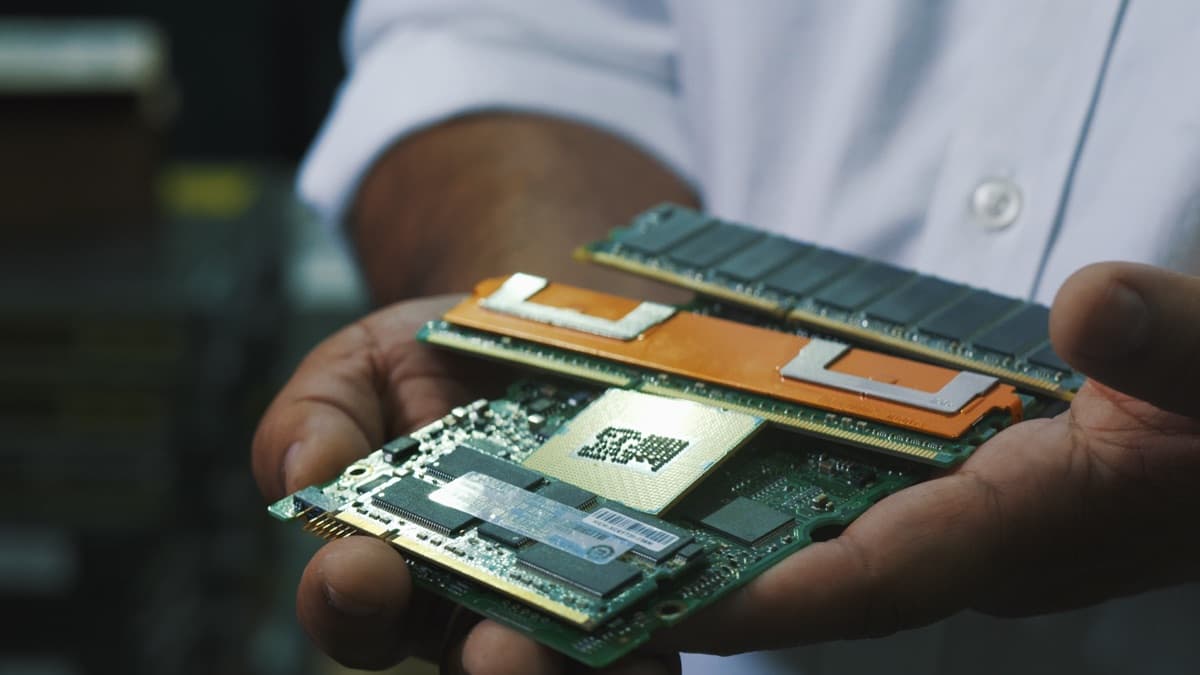
Reuse Technology Group ITAD facility and secure IT asset processing

Assets collected

1,248

Data sanitised

982

Buyback value

£18k

CO₂e saved

42t

Established

2008

Certification

ADISA 8.0

Coverage

UK · EU · WW

Response

24–72h

Different sectors face different compliance, data, and logistics challenges. We tailor ITAD programmes to your regulatory environment and operational requirements.

Healthcare

Patient data, GDPR, and secure destruction for clinical environments.

Clinical environments do not pause for an IT project. Devices can usually only be removed once replacements are installed and verified, which makes phased, site-by-site collection the only workable shape for most healthcare refreshes. Patient data raises the stakes further: workstations, bedside tablets, and clinical laptops must all be treated as data-bearing until proven otherwise, and so must the multifunction printers and external drives that rarely appear on any asset register but routinely retain scanned records.

Key Challenges

  • Patient data protection
  • GDPR compliance
  • Secure destruction routes

Compliance Considerations

Special-category health data under UK GDPR attracts the strictest handling expectations, and information governance teams frequently require destruction to happen before equipment leaves the premises. On-site certified erasure removes transit risk entirely for the highest-risk assets, while lower-risk equipment moves under sealed, GPS-tracked transport. Certificates reference individual serial numbers so a specific device can be evidenced years later.

Education

Device refresh programmes and sustainability for schools and universities.

Education estates refresh in large, predictable waves — a whole year group's laptops, an entire suite of lab machines, a campus-wide staff rollout. That concentration is an advantage: volume improves buyback economics, and releasing equipment at the point of refresh rather than after it has spent two years in a store cupboard is where most of the recoverable value actually sits. Budgets are fixed and scrutinised, so a settlement that offsets part of the replacement cost matters more here than in most sectors.

Key Challenges

  • Bulk refresh cycles
  • Student device data
  • Sustainability reporting

Compliance Considerations

Student and staff personal data sits on shared and loaned devices that are often poorly tracked, and safeguarding records raise the sensitivity further. Reuse also aligns closely with the sustainability commitments schools, colleges, and universities increasingly report against, and reuse figures reported separately from recycling give those claims something defensible behind them.

Enterprise

Multi-site IT asset lifecycle support for corporate estates.

Multi-site corporate estates fail on consistency rather than capability. When each office arranges its own disposal, the organisation ends up with several different processes, incompatible records, and no single view of what was retired or where the evidence lives. A single programme applies the same collection, sanitisation, and reporting standard everywhere, sequences sites so no location loses working equipment prematurely, and consolidates the output into one register.

Key Challenges

  • Multi-site logistics
  • Asset reconciliation
  • Executive reporting

Compliance Considerations

Asset reconciliation is usually the hardest part, because the corporate asset register and the equipment that actually exists diverged some years ago. Capturing asset tags alongside serial numbers at the point of collection lets items be matched back to a CMDB or fixed-asset register, and discrepancies get flagged and investigated rather than quietly absorbed into a total.

Financial Services

High-risk data handling with audit evidence for regulated firms.

For regulated firms the constraint is almost never logistics — it is evidence. Compliance teams need to demonstrate device by device that every piece of storage media leaving the building was accounted for and irreversibly dealt with, and that demonstration has to hold up long after the project team has moved on. Batch certificates covering unspecified totals do not survive that test; certificates referencing individual serial numbers do.

Key Challenges

  • Regulatory audit trails
  • High-risk media
  • Certificate evidence

Compliance Considerations

Regulatory scrutiny, client contractual obligations, and insurer requirements often exceed the baseline GDPR position, and risk appetite frequently rules out resale for higher-classification media regardless of residual value. Closing reconciliation between the collection inventory and the destruction record is the artefact audit functions ask for first, because an unexplained variance is precisely what they are looking for.

Government

Controlled collection and documentation for public sector bodies.

Public sector disposal carries an accountability dimension private organisations do not face: decisions may be examined through freedom of information requests, audit committees, or public scrutiny of value for money. That makes documentation quality and demonstrable process consistency as important as the disposal outcome itself, and makes unevidenced free collection offers a particularly poor trade.

Key Challenges

  • Controlled handling
  • Procurement compliance
  • Documented disposal

Compliance Considerations

Procurement frameworks set the terms of engagement, and both data handling and environmental compliance need to be evidenced against them. Recovered value has to be accounted for transparently, and disposal decisions need a defensible rationale on the record. Asset-level reporting supports all three without additional reconstruction work later.

Data Centres

Infrastructure decommissioning with secure removal and recovery.

Data centre work differs from ordinary IT disposal in three ways that each change the plan rather than just the logistics: the equipment is dense and heavy, much of it is still live when planning starts, and the volume of data-bearing media in a single rack can exceed an entire office refresh. Floor loading, lift capacity, loading bay access, and out-of-hours restrictions set the realistic pace far more than headcount does.

Key Challenges

  • Infrastructure scale
  • Secure removal
  • Value recovery

Compliance Considerations

Colocation contracts add removal windows and make-good obligations worth reading before the first cabinet is touched. Where infrastructure is retired alongside services that must stay live, work is phased so dependencies come down in a safe order. Enterprise hardware also holds residual value well, so recovery from servers, storage, and switching frequently offsets a meaningful share of project cost.

Need secure IT disposal across the UK?

Speak with Reuse Technology Group about secure collection, certified data destruction, asset recovery, and sustainability reporting for your organisation.

Prefer to speak first? Book a consultation · 01708 558 297

GDPR-aware processes · Auditable reporting · Responsible recycling