
7 Hidden Data Security Risks in Enterprise IT Disposal (And How to Eliminate Them)
8 min read · 15 April 2026
TL;DR
Improper enterprise IT disposal exposes UK businesses to devastating data breaches and severe WEEE environmental fines. Basic wiping cannot secure modern SSDs, hidden peripheral storage, or untracked ghost IT. To eliminate these vulnerabilities, organisations must utilise certified ITAD providers to guarantee secure, documented tech recycling.
TL;DR
Improper enterprise IT disposal exposes UK businesses to devastating data breaches and severe WEEE environmental fines. Basic wiping cannot secure modern SSDs, hidden peripheral storage, or untracked ghost IT. To eliminate these vulnerabilities, organisations must utilise certified ITAD providers to guarantee secure, documented tech recycling.
When upgrading hardware, the final stage of the equipment lifecycle is frequently treated as a basic logistical chore rather than a critical cybersecurity priority. But discarded servers, laptops, and drives hold devastating potential for financial and reputational ruin if left unprotected. In 2024, the average cost of a data breach in the UK surged past £3.4 million. Leaving IT asset disposal as an afterthought is a gamble that modern enterprises simply cannot afford.
What are the unseen dangers of improper IT disposal?
Improper IT disposal occurs when a business discards electronic devices without verifying data destruction or adhering to strict environmental protocols. It isn't just about throwing a server in a skip; even donating devices to schools or handing them over to an informal recycler without verified data wiping counts as improper disposal.
A major unseen danger is the false sense of security surrounding data deletion. Simply formatting a drive or emptying the desktop 'recycle bin' does not permanently delete your company data. Legacy files remain firmly on the hard drive's surface, leaving them easily recoverable by cybercriminals with basic software. True security demands certified destruction methods that render the information completely and irrevocably destroyed.
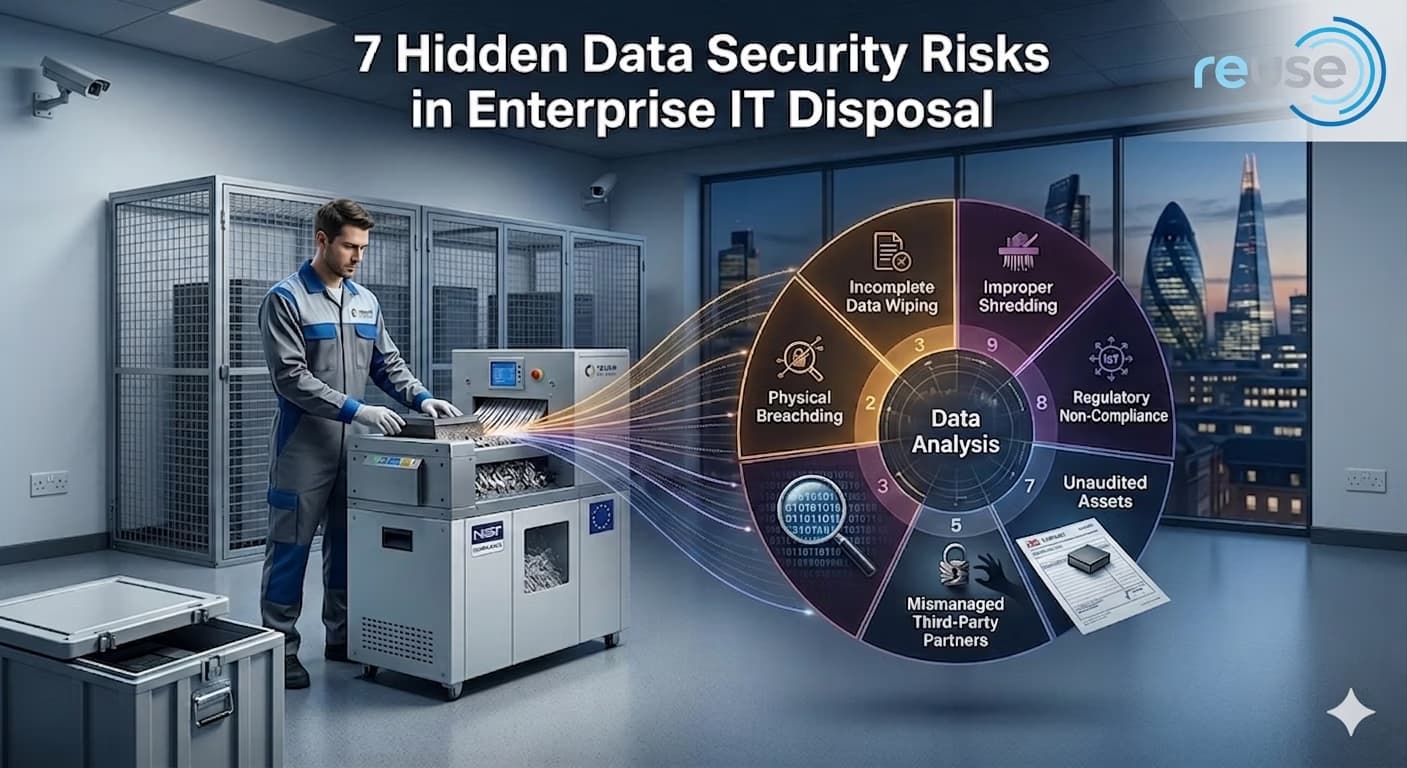
The 7 hidden IT disposal security risks
1. Incomplete Data Erasure and Surface-Level Wiping
Basic software wiping tools routinely leave residual data behind, especially on modern Solid-State Drives (SSDs). SSDs utilise complex wear-levelling algorithms that redirect basic overwriting commands to fresh memory blocks, leaving the original, highly sensitive data intact but hidden from the host operating system.
To eliminate this, you must abandon standard factory resets. Instead, mandate certified data destruction methods like cryptographic erasure, which permanently deletes the encryption key to render the data instantly indecipherable. Always adhere to strict NIST sanitisation protocols (such as NIST SP 800-88) to guarantee that all media is forensically cleared, purged, or physically micro-shredded.
2. Unauthorised Access During Chain of Custody
The most vulnerable moment for your decommissioned hardware is when it is physically in transit. Assets are highly susceptible to loss or theft during the collection and transportation phases if secure logistics protocols are ignored. A missing device mid-transit immediately results in unauthorised access and constitutes a reportable regulatory breach.
Ensure your disposal vendor uses secure, locked, and tamper-evident transport containers and vehicles. Maintaining a continuous, digitally tracked chain of custody with scanned signatures ensures your assets travel safely from your corporate loading bay to the processing facility without interception.
3. The Growing Threat of Ghost IT
Research indicates that approximately 30% of IT assets go unaccounted for during the disposal process. This phenomenon, known as ghost IT, consists of purchased but untracked legacy devices—such as forgotten tablets or remote work laptops—that sit outside the corporate asset register. When these eventually slip out of the business informally, they become prime targets for data theft.
Implement dynamic IT Asset Management systems that meticulously track the full lifecycle of every device from procurement to final decommissioning. Conduct regular physical inventory audits to ensure all hardware is properly reconciled against the central register before it is handed over for secure tech recycling.
4. Regulatory Non-Compliance and Environmental Fines
Improper disposal carries a dual threat. Not only do you risk severe Information Commissioner’s Office (ICO) penalties for data exposure under the UK GDPR, but you also face significant environmental fines for violating WEEE regulations. Discarding e-waste illegally or using unlicensed waste carriers can lead to fixed penalties, prosecution, and unlimited fines in higher courts.
Only partner with licensed waste carriers who guarantee full compliance with UK environmental laws. Ensure your provider issues legally valid waste transfer notes and properly diverts all hazardous electronic waste away from landfill to avoid any regulatory backlash or reputational damage.
5. Relying on Unverified or 'Free' Recycling Partners
The promise of "free" secure tech recycling is often a dangerous myth. Vendors offering free services frequently cut corners, sometimes skipping the data wiping process entirely to quickly salvage and resell parts. This has led to numerous high-profile UK data breaches where secondhand corporate computers were sold on the grey market with sensitive patient and financial files fully intact.
Procurement teams must rigorously vet any ITAD provider. Demand verified, auditable documentation and ensure they hold elite accreditations like ADISA Standard 8.0, which guarantees they are independently audited for stringent data sanitisation and security practices.
6. Physical Theft of Stockpiled Legacy Devices
It is common practice for businesses to hoard old, unused IT infrastructure in unsecured office storage cupboards or overflowing server rooms. These stockpiles are rarely monitored, making it incredibly easy for opportunistic thieves, cleaners, or disgruntled employees to physically steal hard drives packed with confidential records.
Establish a strict policy against hoarding retired assets. Devices awaiting disposal should be moved immediately to a locked staging area with heavily restricted access. Schedule frequent, routine collections with your ITAD partner to prevent the dangerous accumulation of legacy hardware.
7. Overlooking Firmware and Embedded Storage
While IT teams generally remember to wipe main servers and executive laptops, they frequently overlook the embedded storage hidden in peripheral and IoT devices. Modern office equipment, including copiers, network switches, and smart sensors, contain hidden hard drives and flash memory that cache highly sensitive network configurations, passwords, and scanned documents.
Update your decommissioning policies to encompass all smart devices, networking gear, and telecommunications equipment. Your ITAD provider must possess the technical expertise to locate, wipe, or physically destroy the hidden memory modules buried deep within these frequently overlooked peripheral assets.
How to establish a secure tech recycling policy
To protect your organisation, secure and documented hardware lifecycle management must become standard operating procedure. Begin by defining clear internal responsibilities and ensuring that both your security and procurement teams collaborate to embed strict data destruction requirements in every vendor contract and request for proposal.
Demand an unbroken, verifiable audit trail for every single asset. Your policy should mandate the collection of a formal Certificate of Destruction for every device, explicitly detailing the exact sanitisation method used and verifying the irretrievable removal of data. By actively integrating these certificates back into your asset management system, you can instantly prove compliance to regulators and auditors.
Eliminate enterprise disposal risks with Reuse Technology Group
Safeguarding your enterprise's sensitive data while navigating strict environmental laws requires a trusted, certified partner. Reuse Technology Group is the premier ITAD partner for UK companies looking to ensure every legacy asset is decommissioned securely and ethically.
Offering industry-leading expertise in regulatory compliance, rigorous data sanitisation, and comprehensive sustainability reporting, Reuse Technology Group guarantees that your hardware is handled flawlessly from start to finish. By partnering with them for your secure tech recycling, you protect your brand's reputation, eliminate critical data vulnerabilities, and actively contribute to a sustainable circular economy.
Frequently Asked Questions
What are the main data security risks during IT asset disposal?
The primary IT disposal security risks include incomplete data erasure, loss of devices during transit, the proliferation of untracked ghost IT, the physical theft of stockpiled devices, and overlooking hidden data stored in peripherals like printers, routers, and IoT hardware.
How can a data breach occur from recycled computers?
Breaches typically happen when businesses rely on surface-level formatting or unverified recycling vendors. If the storage media isn’t subjected to certified cryptographic erasure or physical shredding, malicious actors can easily recover residual files after the device is resold on the secondary market.
What are the WEEE compliance requirements for UK enterprises?
Under the WEEE regulations, UK businesses must ensure that electronic waste is safely collected, treated, and recycled without harming the environment. This involves using licensed carriers, maintaining accurate waste transfer documentation, and strictly avoiding illegal dumping, which carries the risk of unlimited environmental fines.
How does professional ITAD prevent unauthorised access to legacy data?
A professional ITAD provider mitigates risk by enforcing a strict, GPS-tracked chain of custody from your site directly to their processing facility. They utilise military-grade software or physical destruction methods to ensure irreversible NIST sanitisation, backing up the entire process with auditable certificates of destruction.
Breaches typically happen when businesses rely on surface-level formatting or unverified recycling vendors. If the storage media isn't subjected to certified cryptographic erasure or physical shredding, malicious actors can easily recover residual files after the device is resold on the secondary market.
Under the WEEE regulations, UK businesses must ensure that electronic waste is safely collected, treated, and recycled without harming the environment. This involves using licensed carriers, maintaining accurate waste transfer documentation, and strictly avoiding illegal dumping, which carries the risk of unlimited environmental fines.
A professional ITAD provider mitigates risk by enforcing a strict, GPS-tracked chain of custody from your site directly to their processing facility. They utilise military-grade software or physical destruction methods to ensure irreversible NIST sanitisation, backing up the entire process with auditable certificates of destruction.
Don't let your retired hardware become your next major data breach.
Fill out the contact form below to consult with our certified ITAD experts and build a bulletproof, sustainable tech recycling strategy for your business today.