
Enterprise
Data centre rack decommission and recovery
Enterprise client decommissioning 120 server racks needed secure removal, data sanitisation, and residual value recovery.
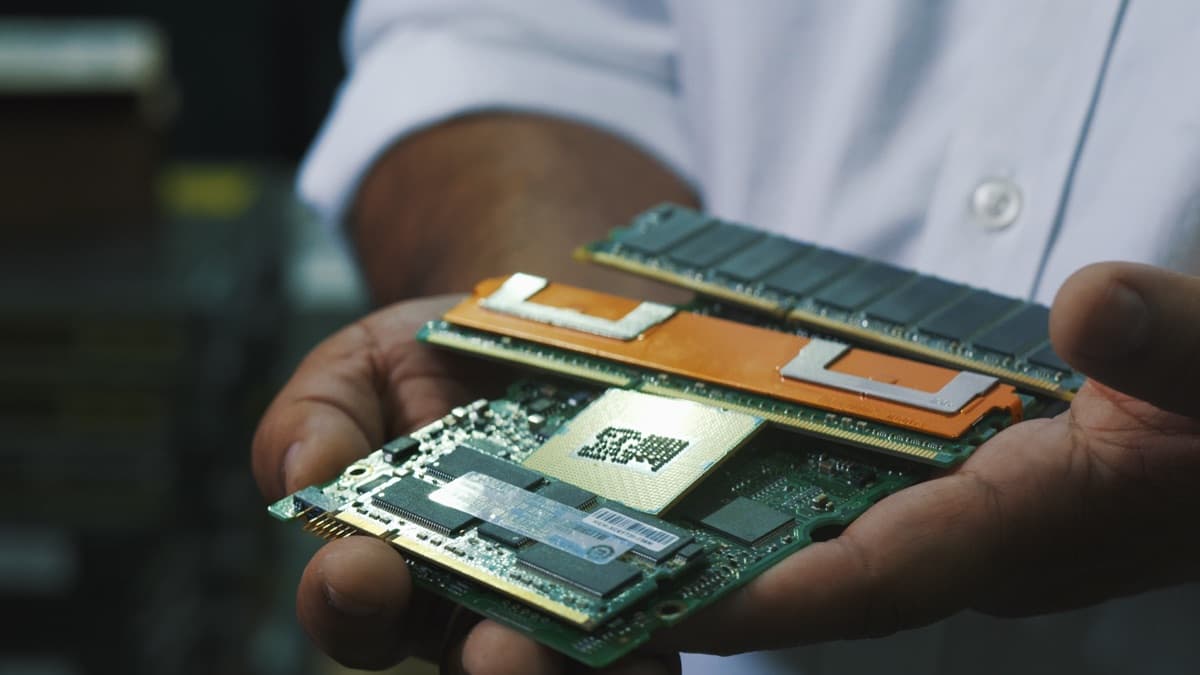
Assets collected
1,248
Data sanitised
982
Buyback value
£18k
CO₂e saved
42t
Established
2008
Certification
ADISA 8.0
Coverage
UK · EU · WW
Response
24–72h
Challenge
Enterprise client decommissioning 120 server racks needed secure removal, data sanitisation, and residual value recovery.
Solution
Structured decommission plan, secure logistics, certified destruction, and resale of viable network and server hardware.
Outcome
Infrastructure removed on schedule. Significant buyback value returned. Complete inventory and certificate pack delivered.
The situation
An enterprise client was migrating workloads off owned infrastructure and needed 120 racks removed from a facility that would remain partially operational throughout. Servers, storage arrays, top-of-rack switching, UPS systems, and several years of accumulated cabling all had to come out, while the remaining estate stayed in service without interruption.
Survey before schedule
The site survey came first, and it changed the plan. Floor loading limited how much could be staged at once, the goods lift capacity set the realistic pace of removal far more than manpower did, and out-of-hours restrictions narrowed the working window. Mapping which cabinets could come down without disturbing live services produced a removal order that bore little resemblance to the row-by-row sequence originally assumed. Most decommissioning problems are access problems found too late; this one was found early.
Working alongside live infrastructure
Because the facility stayed partially operational, cabling was traced and labelled before anything was disconnected, and power isolation followed a controlled sequence with sign-off at each phase before the next began. This is slower than clearing an empty room and considerably cheaper than an outage. No live service lost redundancy without prior agreement, and the migration schedule was never held up by the decommission running behind it.
Media volume
The quantity of data-bearing media inside 120 racks exceeded what a typical office refresh produces several times over. Drives were removed, catalogued, and reconciled against the survey inventory, then sanitised through certified erasure or physical destruction depending on condition and classification. Drive counts were matched against the register at close, because on a project this size an unexplained variance of even a handful of devices is exactly what an auditor will find.
Recovering £42k
Enterprise infrastructure holds residual value better than end-user hardware — the secondary market for servers, storage controllers, switching, and optics is deeper and less driven by fashion. After sanitisation was complete and certified, viable equipment was tested, graded, and routed to resale, returning £42,000 against the cost of the project. Nothing entered a resale channel before its media had been destroyed and the certificate issued.
The outcome
Infrastructure was removed on schedule with minimal downtime to the remaining estate. The client received a full asset register reconciled against the original survey inventory, certificates referencing individual serial numbers, environmental and reuse reporting, and a settlement statement covering the recovered value. The reconciliation between survey and destruction record was the artefact their audit function cared about most.
Other Case Studies
- 500-device secure decommission for London financial firm
How a regulated London financial firm securely decommissioned 500 devices in five days with full certificate evidence and audit trail.
- Multi-site clinical device refresh programme
GDPR-compliant clinical workstation disposal across eight NHS-affiliated sites with 68% reuse and zero data incidents.
Need secure IT disposal across the UK?
Speak with Reuse Technology Group about secure collection, certified data destruction, asset recovery, and sustainability reporting for your organisation.
Prefer to speak first? Book a consultation · 01708 558 297
GDPR-aware processes · Auditable reporting · Responsible recycling